
Discover the secrets to perfect coffee roasting at home in our top 10 list of common mistakes. From the bitter traps of over-roasting to the grisly surprises of under-roasting, learn how to navigate the science and artistry of the roasting process. With insights from leading American experts and a pinch of humor, you’ll get practical tips to avoid pitfalls and create a flavor experience that impresses. Perfect for both beginners and coffee enthusiasts looking to take their skills to the next level!
1. Over-roasting: When coffee turns to charcoal
Over-roasting is a common mistake that can turn your beans into something more like charcoal than coffee. According to CoffeeResearch.org, the roasting process is a balancing act where aromatics and acids are created and balanced[8]. To avoid over-roasting, use a
2. Under-roasting: When coffee tastes like grass
Under-roasting results in coffee that tastes sour or grassy, which is far from the flavor experience we strive for. According to the UC Davis Coffee Center, coffee is most acidic during the first crack, which is when

3. Uneven roasting: When every cup is a lottery
Uneven roasting can turn every cup of coffee into a surprise. To get an even roast, make sure the beans are stirred regularly during the process. According to Coffee & Health, it’s important to vary the roasting conditions to achieve the specific flavor profile you desire[7]. Use a roaster
4. Improper temperature control: When coffee becomes a science experiment
Not maintaining the right temperature can lead to both over- and under-roasting. According to an NCBI article, roasting techniques affect the chemical composition and flavor of coffee[6]. Invest in a good thermometer and learn to adjust the temperature based on the density and moisture content of the beans. Remember, we’re not in a lab, but a little science never hurts!

5. Improper storage of green coffee: When coffee tastes like the pantry
Raw coffee stored incorrectly can pick up unwanted aromas and flavors. Store your beans in an airtight container in a cool, dark place. According to the National Coffee Association, green beans should be stored to preserve quality and flavor[2]. No one wants coffee that tastes like the spice cabinet!
6. Lack of experience and knowledge: When you think you are a barista after the first try
Roasting takes time and practice. Start with small batches and experiment with different beans and roast levels. According to CoffeeResearch.org, roasting is a process where aromatics and acids are created and balanced[8]. Don’t forget to enjoy the process and learn from your mistakes. No one became a master overnight, not even baristas!

7. Not letting the coffee rest: When patience is not a virtue
Freshly ground coffee may taste better after ‘ripening’ a day after roasting. Let the beans rest in a sealed container before brewing your coffee. It’s like letting a good bottle of wine breathe before enjoying it.
8. Not using the right equipment: When trying to roast coffee in a microwave
While it is possible to roast coffee in a microwave, it is not recommended for best results. According to Coffee & Health, it is important to use the right equipment to achieve the desired flavor profile[7]. Invest in a good coffee roaster or use an oven for a more even and controlled roast.

9. Ignoring the origin of beans: When all beans are treated equally
Different beans have different flavor profiles and require different roasting methods. According to the UC Davis Coffee Center, geographic factors affect the taste of coffee[1]. Get to know your beans and adjust roasting accordingly. It’s like cooking; each ingredient needs its own treatment to reach its full potential.
10. Not tasting and adjusting: When you forget to enjoy the fruits of your labor
After roasting, taste the coffee and adjust future roasts based on your likes and dislikes. Coffee roasting is a journey, and every cup is an opportunity to learn something new.
Scientific insights and techniques
Chemical changes during roasting
During the roasting process, several chemical changes occur. According to CoffeeResearch.org, roasting is a chemical process in which aromatics, acids, and other flavor components are created, balanced, or altered[8]. At high temperatures, the beans undergo a Maillard reaction, which gives the coffee its characteristic taste and aroma.
The importance of roasting profiles
According to Wikipedia, roasting profiles are used to achieve specific flavor characteristics[5]. A roasting profile can be presented as a graph showing time and temperature, and can be recorded manually or using computer programs and data logs linked to temperature probes in different parts of the roast.
Roasting techniques and equipment
There are different techniques and equipment for coffee roasting. According to the NCBI, beans can be roasted in batch or continuous systems, and heat can be transferred by conduction, convection or radiation[6]. The most common type of coffee roaster for home use is the drum roaster, which roasts the beans by rotating them in a horizontal cylinder.
Conclusion
Coffee roasting at home is a great opportunity to enjoy fresh coffee and explore different flavors. By avoiding these common mistakes and using scientific insights, you can improve your roasting technique and enjoy a better cup of coffee every time. And remember, even if you make mistakes, the most important thing is to have fun and enjoy the process!
- Product on sale
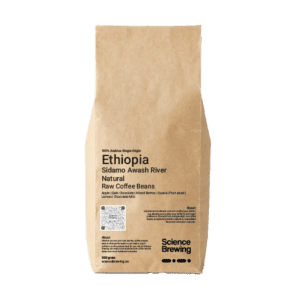
 Ethiopia Sidamo Awash River Natural – Raw coffeePrice range: 6,78 € through 16,23 €
Previous lowest price was 7,19 €.
excl. VAT Price range: 7,19 € through 17,20 €Previous lowest price was 7,19 €.
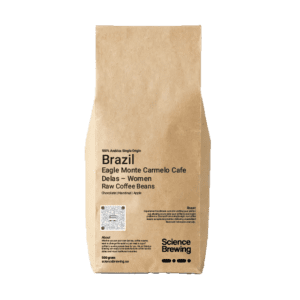
incl. VAT - Brazil Eagle Monte Carmelo Cafe Delas – Women – raw coffeePrice range: 6,35 € through 60,09 € excl. VAT Price range: 6,73 € through 63,70 € incl. VAT
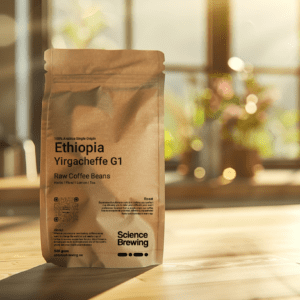
- Ethiopia Yirgacheffe G117,94 € excl. VAT19,02 € incl. VAT
Citations:
[1] https://engineering.ucdavis.edu/news/engineers-guide-coffee-bean-brew
[2] https://www.ncausa.org/About-Coffee/Coffee-Roasts-Guide
[3] https://gaftp.epa.gov/ap42/ch09/s132/final/c09s1302_sep1995.pdf
[4] https://calvin.edu/stories/professors-research-impacts-coffee-roasting-six-continents
[5] https://en.wikipedia.org/wiki/Coffee_roasting
[6] https://www.ncbi.nlm.nih.gov/pmc/articles/PMC7684626/
[7] https://www.coffeeandscience.org/about-coffee/roasting-grinding
[8] http://www.coffeeresearch.org/coffee/roasting.htm