While most of us appreciate coffee for its invigorating effect and rich taste, there is an often overlooked health aspect that deserves more attention – coffee as a source of fiber. In this article, we’ll dive deep into the science behind coffee’s fiber content and how it can contribute to your daily fiber consumption, especially when you roast your own coffee at home.
Fibers in coffee: a surprise for many
Few people think of coffee as a source of dietary fiber, but research shows that a typical cup of coffee can contain between 1.1 and 1.8 grams of soluble fiber. James Hoffmann, world-renowned coffee expert and author, has noted this in his book ‘The World Atlas of Coffee’:
“The nutritional benefits of coffee go far beyond caffeine. The significant amount of soluble fiber in each cup contributes to coffee’s health-promoting properties, something often overlooked in the discussion of coffee’s health benefits.”
To put this into perspective, let’s compare with other sources of fiber. One serving of oatmeal contains around 4 grams of fiber, which means that your morning cup of coffee can actually contribute a significant portion of your daily fiber intake. For more information on the health aspects of coffee, see our comprehensive guide on the health benefits of coffee.
The unique fiber properties of raw coffee

Raw coffee actually contains higher levels of different types of fiber compared to roasted coffee. Dr. Monika Fekete, founder of the Coffee Science Lab, explains:
“Raw coffee beans contain a complex matrix of different fibers, including cellulose, hemicellulose and pectins. These fibers play an important role not only in our health but also in the final flavor profile of the coffee.”
Some of the main fibers in raw coffee include:
- Cellulose (insoluble fiber)
- Hemicellulose (partially soluble fiber)
- Pectin (soluble fiber)
- Lignin (insoluble fiber)
How the roasting process affects fiber content
When roasting coffee at home, it is important to understand how different roasting degrees affect the fiber content. Researchers have discovered that the roasting process can affect both the amount and type of fiber in the final product.
Dr. Britta Folmer, Head of Research at the Nestlé Coffee Research Center, describes the process:
“During roasting, the fibers of the coffee bean undergo various chemical changes. While some fibers break down, others can be converted into more soluble forms. This is one of the reasons why dark roast coffee is often perceived as ‘thicker’ in the mouth.”
To optimize the fiber content when roasting at home, consider the following:
- Choose the right Development Time
- Check the roasting temperature carefully
- Pay attention to first and second crack
Specialty coffee vs. commercial coffee: Fiber differences

Specialty coffee often differs from commercial coffee in terms of fiber content. This is due to several factors:
- Growing conditions
- Date of harvest
- Processing methods
- Roasting process
Tim Wendelboe, award-winning coffee roaster and entrepreneur, comments:
“High-quality specialty coffees tend to have a more intact cell structure, which can preserve more of the natural fibers. This is particularly noticeable in coffee that has undergone careful processing.”
Maximize fiber content by home roasting
For those who want to maximize the fiber content of their coffee by home roasting, here are some important tips:
- Choose the right green coffee
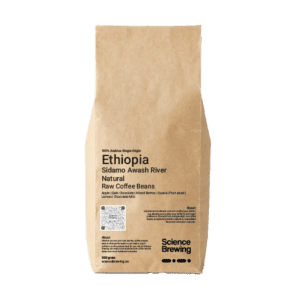
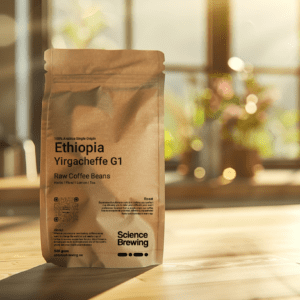
- Sidamo and Yirgacheffe from Ethiopia are known for high fiber content
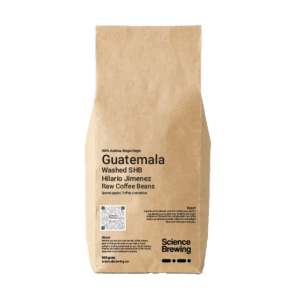
- Guatemalan coffee also has excellent fiber properties
- Optimizing the roasting process
- Use the right roasting equipment
- Follow recommended development times
- Store correctly
- Store your roasted coffee correctly to preserve the fiber content
- Use coffee bags with a valve
Expert insights and scientific perspectives
Dr. Emma Bladyka, coffee researcher and Scientific Director of the Specialty Coffee Association, shares her insights:
“Recent research shows that coffee’s fibers may have prebiotic properties, meaning they can promote the growth of healthy gut bacteria. This adds another dimension to coffee’s already impressive health profile.”
Professor Chahan Yeretzian from the Coffee Excellence Center adds:
“We are seeing more and more evidence that the fiber content of coffee plays an important role in its health effects. Of particular interest is how different brewing methods can affect how much of this fiber is extracted into the finished beverage.”
Practical tips for maximum fiber benefit

To get the most out of coffee’s fibers, consider the following:
- Choose the right grind
- Invest in a quality grinder
- Adapt grinding to brewing method
- Optimizing extraction
- Experimenting with different origins
- Try coffee from different regions
- Compare different processing methods
Conclusion
Coffee as a source of fiber is a fascinating area that deserves more attention. By understanding how different factors affect fibre content, you can optimize your coffee intake for maximum health benefits. For those who roast their own coffee, this knowledge provides another dimension to explore and experiment with.
Remember that fiber is only one of many health aspects of coffee. Combining this knowledge with good roasting and brewing practices can help you get the most out of your daily coffee experience.
- Product on sale
 Ethiopia Sidamo Awash River Natural – Raw coffeePrice range: 6,78 € through 16,23 €
Previous lowest price was 7,19 €.
excl. VAT Price range: 7,19 € through 17,20 €Previous lowest price was 7,19 €.
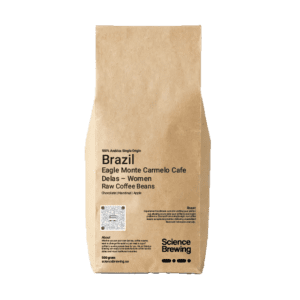
incl. VAT - Brazil Eagle Monte Carmelo Cafe Delas – Women – raw coffeePrice range: 6,35 € through 60,09 € excl. VAT Price range: 6,73 € through 63,70 € incl. VAT
- Ethiopia Yirgacheffe G117,94 € excl. VAT19,02 € incl. VAT
- Guatemala Washed SHB Hilario Jimenez – Raw coffeePrice range: 5,92 € through 15,37 € excl. VAT Price range: 6,28 € through 16,29 € incl. VAT
- India Arabica Malabar AA, Monsooned – Green coffeePrice range: 10,74 € through 17,08 € excl. VAT Price range: 11,38 € through 18,11 € incl. VAT
- Colombia Dulima EP10 – Green coffeePrice range: 6,78 € through 17,08 € excl. VAT Price range: 7,19 € through 18,11 € incl. VAT