Have you ever thought about taking the step from buying pre-roasted beans to roasting your own coffee? Maybe you’ve heard of the term ‘develop time’ and wondered what it actually means? In this article, we’ll dive deep into the fascinating world of coffee roasting, with a special focus on development time and its importance for the perfect cup of coffee. Whether you’re a beginner wanting to learn more about green coffee or an experienced home roaster looking to refine your techniques, we have something for you.
What is green coffee and why should you roast your own?
Before we get into the details of development time, let’s take a step back and talk about the basis of all good coffee: green coffee. Green coffee is simply unroasted coffee beans, just as they look when picked from the coffee plant and processed. These green beans are hard, have a grassy aroma and are far from the aromatic pleasure we associate with a freshly brewed cup of coffee.

So why would anyone want to roast their own coffee when there are so many excellent roasted options available? Here are
- Freshness: By roasting your own coffee, you can guarantee maximum freshness. Coffee is at its best within a few weeks of roasting, and when roasting at home, you can always have freshly roasted coffee on hand.
- Customization: Roasting your own coffee gives you full control over the roast profile. You can experiment with different development times and temperatures to create a flavor that suits your taste.
- Cost-effectiveness: Green coffee is often cheaper than roasted beans, especially for high-quality specialty coffee.
- Knowledge and appreciation: Roasting your own coffee gives you a deeper understanding and appreciation of the complexity of coffee.
- Shelf life: green coffee has a longer shelf life than roasted beans, making it possible to purchase larger quantities and store them for longer.
Now that we’ve established the benefits of roasting your own coffee, let’s dive into the heart of the topic: development time in coffee roasting.
What is ‘develop time’ in coffee roasting?
Develop time is a critical phase in the coffee roasting process. It is the period that begins when the beans start to crack (first crack) and ends when roasting is completed. During this time, many of the complex flavors and aromas that we associate with good coffee develop.

To understand the importance of the development time, let’s break down the coffee roasting process into its main phases:
- Drying phase: Here the moisture evaporates from the beans, and they slowly start to turn yellow.
- Maillard reaction: The beans start to turn brown and develop complex flavors.
- First crack: The beans expand and make a cracking sound.
- Development phase: From the first crack to the end of roasting.
- Second crack: If roasting continues, the beans will crack again and oils will start to penetrate to the surface.
The development period is thus the period between the first crack and the end of roasting. It is during this phase that many of the characteristic flavors of coffee develop and are refined.
Why is development time so important?
The development time is crucial for the final flavor profile of the coffee. Too short a development time can result in underdeveloped flavors, while too long a development time can lead to over-roasted coffee with burnt or bitter notes. Finding the perfect balance is the key to roasting delicious coffee.

Here are some of the factors influenced by development time, read more about flavor profiles here:
- Sweetness: A well-balanced development time promotes the development of natural sugars in the bean, resulting in a pleasant sweetness.
- Acidity: Development time affects the acidity of the coffee. A shorter time tends to preserve more of the bean’s natural acidity.
- Body fullness: Longer development time can produce a fuller coffee, while shorter time often results in a lighter coffee.
- Complexity: The development time affects how well different flavor notes are balanced and integrated.
- Aftertaste: A well-managed development time can contribute to a long-lasting and pleasant aftertaste.
How to measure development time?
To measure the development time, you need a roasting meter that can record the temperature and time during the roasting process. Modern roasting meters can often also track the Rate of Rise (RoR), which is the speed of the temperature increase.
Development time is usually measured as a percentage of the total roasting time. For example, if your total roasting time is 10 minutes and the development time is 2 minutes, you have a development time percentage of 20%.
Most coffee experts recommend a development time of between 20-25% of the total roasting time for optimal flavor development. But remember, coffee is an art form as well as a science, so there is always room for personal preference and experimentation!
Tips for managing development time when roasting your own coffee
Mastering the development time is one of the biggest challenges for home roasters. Here are some tips to help you along the way:
- Start by keeping careful notes: Document each roast, including total roasting time, time of first crack, development time and final temperature.
- Experiment with different development times: Try roasting the same green coffee with different development times and compare the results.
- Listen carefully: The first crack is your starting signal for development time. Train your ear to recognize the sound.
- Use your senses: In addition to time and temperature, use your eyes, ears and nose to assess the roasting.
- Be consistent: Try to keep other variables constant when experimenting with development time.
- Be patient: It takes time to learn how to manage development time perfectly. Be prepared for some less successful roasts along the way!
Green coffee and its impact on development time
Different types of green coffee may require different development times to reach their full potential. Here are some factors to consider:
- Origin: Coffee beans from different regions can have different densities and moisture content, which affects how they react during roasting.
- Altitude: Coffee grown at higher altitudes tends to be denser and may require longer development time.
- Processing method: How the green coffee has been processed (e.g. wet-processed, honey-processed or natural) can influence its behavior during roasting.
- Age: Fresher green coffee may need a slightly shorter development time compared to older beans.
- Size and density: Larger and denser beans may require longer development time for the heat to penetrate properly.
Understanding these factors can help you adapt your roasting technique for different types of green coffee and achieve the best possible results.
Common mistakes to avoid when it comes to development time
When you start experimenting with roasting your own coffee, it’s easy to make some mistakes. Here are some common pitfalls to be aware of:

- Too short a development time: This can result in underdeveloped flavors and a grassy or sour taste.
- Too long development time: This can lead to over-roasted beans with burnt or bitter notes.
- Uneven development time: Inconsistent development time between roasts can make it difficult to replicate good results.
- Ignoring other factors: Although development time is important, it must be balanced with other factors such as total roasting time and temperature gradient.
- Not adapting for different green coffees: Using the same development time for all types of green coffee can lead to suboptimal results.
- Relying on time alone: While timing is important, it is equally important to use your senses to assess roasting.
Advanced techniques to optimize development time
For the more experienced home roasters, there are some advanced techniques that can help fine-tune the development time:
- Rate of Rise (RoR) control: By carefully controlling the rate of temperature rise during the development phase, you can influence flavor development more precisely.
- Heat adjustment: learn how to adjust the heat during the development phase to influence the flavor profile. For example, a gradual reduction of heat can provide a smoother development.
- Batch size: Experiment with different batch sizes to see how it affects development time and flavor.
- Double crack technique: Some roasters use a technique where they aim for two distinct “cracks” during the development phase to achieve specific flavor profiles.
- Profile duplication: Learn how to replicate successful roasting profiles by carefully documenting and following temperature curves.
Impact of development time on different coffee brewing methods
It is worth noting that the optimal development time may vary depending on how you plan to brew your coffee. Here are some general guidelines:
- Espresso: Tends to benefit from a slightly longer development time to reduce acidity and increase body.
- Pour-over: Can benefit from a medium development time to balance clarity and complexity.
- French press: Often best with a slightly shorter development time to preserve the natural oils and complexity of the coffee.
- Cold brew: Can benefit from a longer development time to emphasize sweetness and reduce acidity.


Remember that these are general guidelines and that personal taste always plays a role!
The future of development time in coffee roasting
While development time has been an important concept in coffee roasting for decades, research and innovation continue to push the field forward. Here are some exciting developments to keep an eye on:
- AI-assisted roasting: Machine learning algorithms that can predict optimal development times based on the characteristics of the raw coffee.
- Precision sensors: New types of sensors that can provide even more detailed data on what happens inside the beans during the development phase.
- Molecular analysis: more sophisticated methods to analyze the chemical changes that occur during the development phase.
- Sustainable roasting techniques: Research on how to optimize development time to minimize energy consumption without compromising quality.
Conclusion
Development time is a fascinating and critical aspect of coffee roasting that plays a crucial role in the final flavor of your cup. By understanding and mastering this phase, you can take your home-roasted coffee to new heights.
Roasting your own coffee from green coffee is a journey of learning, experimentation and, hopefully, many delicious cups of coffee along the way. It requires patience, attention to detail and a willingness to learn from both successes and failures.
So next time you roast a batch of your favorite raw coffee, think about that magical development time and how it shapes the flavors in your cup. And remember, as with all art, there are no absolute rules – only guidelines. The best roast is the one that tastes best to you!
Here’s to good coffee and happy roasts!
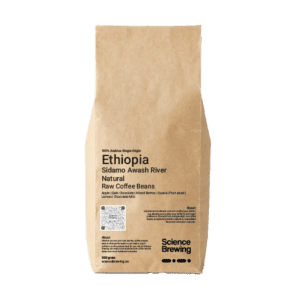
- Product on saleEthiopia Sidamo Awash River Natural – Raw coffeePrice range: 6,78 € through 16,23 €
Previous lowest price was 7,19 €.
excl. VAT Price range: 7,19 € through 17,20 €Previous lowest price was 7,19 €.
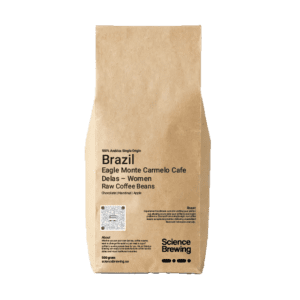
incl. VAT - Brazil Eagle Monte Carmelo Cafe Delas – Women – raw coffeePrice range: 6,35 € through 60,09 € excl. VAT Price range: 6,73 € through 63,70 € incl. VAT
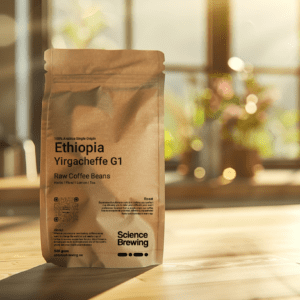
- Ethiopia Yirgacheffe G117,94 € excl. VAT19,02 € incl. VAT