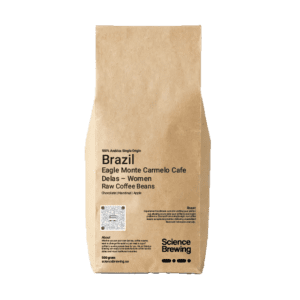
How to Roast Brazilian Coffee at Home: A Guide to Roasting Brazil Eagle Monte Carmelo Café Delas
Roasting coffee at home is an art form that combines science and creativity. To get the best out of your Brazilian coffee, it’s important to understand the origin, the characteristics of the beans and the specific techniques needed to achieve the desired flavor.
Introduction to Brazilian Coffee
Brazil is the world’s largest producer of coffee and accounts for a significant share of world coffee production. Coffee from Brazil is known for its smooth and balanced flavors with notes of chocolate, nuts and caramel. In addition,

Characteristics of Brazilian Coffee
Brazilian coffee is often associated with:
- Low to medium acidity
- Soft and balanced flavors
- Notes of chocolate, nuts and caramel
- Soft body and round mouthfeel
These characteristics make Brazilian coffee versatile and easy to work with for both beginners and experienced coffee enthusiasts.
Preparing for home roasting
Equipment
To roast coffee at home, you need some basic tools:
- A coffee bean roaster (can be a home roaster, an oven or a frying pan).
- A scale to measure the amount of beans.
- A thermometer to monitor the temperature.
- A cooling fan or sieve to cool the beans quickly after roasting.
- A timer to keep track of the roasting time.
Beans
Before you start roasting, make sure you have high-quality green beans such as Brazil Eagle Monte Carmelo. These beans are carefully selected and have a unique flavor profile that you want to preserve and enhance during the roasting process.
Roasting techniques
Roasting Brazilian coffee can be a challenge due to its density and oiliness. Here are some techniques that can help you get the best results.
Preparation and test roasting
Before you start the actual roasting, it is good to carry out a test roast. This will help you understand how the beans behave during roasting and give you an idea of their flavor potential.
- Weigh out a small amount of beans (about 50 grams).
- Set the roaster to a low temperature and let the beans roast slowly.
- Note how the beans change in color and smell at different temperatures and times.
Slow temperature increase
A slow and controlled temperature rise is ideal for Brazilian beans like Brazil Eagle Monte Carmelo. This helps preserve the delicate flavors and acidity of the beans.
- Start with a low temperature (around 160°C).
- Gradually increase the temperature by about 5°C per minute.
- Pay attention to the first cracking, which usually occurs around 200°C.
- Continue roasting until you reach the desired degree of roasting (between the first and second crack).
Medium-slow roasting
A medium-slow roast is also effective in bringing out the floral and citrusy notes of Brazilian beans.
- Start with a medium temperature (around 180°C).
- Increase the temperature slowly and evenly.
- Keep an eye on the first crack and adjust the temperature to avoid over-roasting the beans.
Careful fast roasting
For those who want to explore the more extreme flavors of Brazilian coffee, a gentle rapid roasting can be interesting. This method requires careful monitoring to avoid overdevelopment.
- Start with a higher starting temperature (around 200°C).
- Increase the temperature quickly but in a controlled manner.
- Keep an eye on the beans to ensure even roasting and avoid burning.
Avoid overheating
An important aspect of roasting Brazilian coffee is to avoid sudden and intense heat increases. This can result in uneven roasting where some beans become overdeveloped while others remain underdeveloped. Coming in with too much energy can lead to a massive loss of energy at the beginning of the first crack, which can cause baking of the beans.
More about the coffee roasting process
The roasting process can be divided into several phases. Each phase affects the final taste and aroma of the coffee, so it is important to monitor and adjust the temperature carefully throughout the process. Read more about
Drying phase
The drying phase is the first phase of roasting and usually lasts 4-8 minutes. During this phase, the beans dry out and turn yellow. It is important to maintain an even and controlled temperature to avoid the beans burning at this point.
Tips for the drying phase
- Keep the temperature between 150-160°C.
- Stir the beans regularly to ensure even drying.
- Monitor the beans closely to avoid overheating.
The Maillard reaction
The Maillard reaction is the next phase and is where the beans start to develop their flavor and aroma profiles. This phase usually lasts 3-6 minutes and is characterized by the beans changing color from yellow to light brown.
Tips for the Maillard reaction
- Increase the temperature gradually to 180-200°C.
- Keep stirring the beans regularly.
- Be sure to note changes in scent and color.
First Crack
The first crack is an important point in the roasting process where the beans start to expand and release steam and gases. This usually occurs at temperatures between 196-205°C. The crack sounds like popping popcorn and marks the beginning of the development phase where the flavors of the beans really start to emerge.
Tips for the First Crack
- Reduce the temperature slightly to avoid over-rusting.
- Listen carefully to the crack and note when it begins and ends.
- Adjust your roasting profile depending on the desired degree of roasting.
The development phase
The development phase, also called the “second crack” for some coffees, is where you fine-tune the roast to achieve the desired flavor profile. This phase usually lasts 1-5 minutes depending on how dark you want your coffee to be.
Tips for the development phase
- Keep a close watch on the temperature.
- Taste the beans regularly to determine when they have reached the desired flavor profile.
- For a lighter roast, finish the development phase early. For a darker roast, let the beans go further into the phase.
Cooling and Storage
After roasting is complete, it is important to cool the beans quickly to stop the roasting process. This prevents the beans from over-roasting and maintains the desired flavors.
Tips for Cooling
- Use a bowl with a fan or a sieve to quickly cool the beans.
- Stir the beans during cooling to ensure an even temperature distribution.
- Store the roasted beans in an airtight container in a cool, dark place to preserve their freshness.
Traditional methods and modern technology
An interesting feature of Brazilian coffee roasting is how traditional methods can inspire modern techniques. By combining traditional insights with modern roasting machines, you can achieve a balance between texture and flavor.
Experiment with different roasting profiles
Experimenting with different roasting profiles is key to finding the perfect balance that brings out the best in your Brazilian coffee beans. Here are some tips for experimenting with roasting profiles:
- Record each roast: Keep a log of each roast, including temperatures, times and observations.
- Taste and evaluate: After each roasting, taste the coffee and evaluate its flavors and aromas.
- Adjust and adjust again: Based on your notes and taste tests, adjust the roasting profile to improve the result.
Closure
Roasting Brazilian coffee at home is a rewarding process that allows you to explore the full flavor potential of coffee. By following the techniques and tips outlined in this guide, you can roast
-
 Brazil Eagle Monte Carmelo Cafe Delas – Women – raw coffeePrice range: 6,35 € through 60,09 € excl. VAT Price range: 6,73 € through 63,70 € incl. VAT
- Brazil Eagle Monte Carmelo Cafe Delas – Filomena Matto – green coffeePrice range: 6,78 € through 17,08 € excl. VAT Price range: 7,19 € through 18,11 € incl. VAT