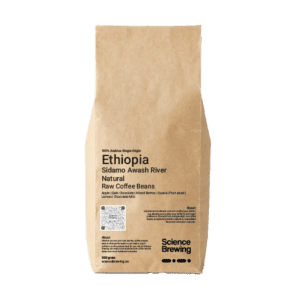
Ethiopia Sidamo Awash River coffee beans are known for their unique and distinctive flavors often described as floral and fruity with a bright and clean acidity. This article explores what makes Awash River coffee beans special and provides a detailed guide to different methods of roasting these beans to bring out their exceptional flavor profiles.

Introduction to the Awash River bean
Awash River coffee is grown in the Sidamo region of southern Ethiopia at high altitudes, which helps to develop a hard and dense bean. The high density means the beans contain more sugar and flavoring, resulting in a richer and more complex taste after roasting. This unique combination of climate and geography gives Awash River coffee its characteristic floral and citrusy flavor profiles that are loved by coffee enthusiasts worldwide.
What makes Awash River special?
Awash River coffee is grown at high altitudes, resulting in a dense bean with high levels of sugar and flavoring. These beans are often smaller than other coffee varieties and can vary in size, making the roasting process more complex. This density and variability means that the beans require a careful and carefully controlled roasting to preserve their subtle and nuanced flavors. It is this complexity and diversity that makes Awash River coffee so fascinating and challenging to roast. The coffee is grown in an area of great biodiversity and unique soil conditions, which contribute to its unique flavors.
Methods for roasting Awash River coffee beans
Preparation and test roasting
Before you start roasting Awash River beans, it is important to have a strategy. A good test roast can provide insight into the flavor potential of the bean at different roast levels as well as how the bean behaves during roasting. This is especially important for Awash River beans which can be unpredictable. Being prepared for surprises and adjusting the roasting profile accordingly is crucial to bring out the full flavor potential of the coffee.
Roasting methods
Method 1: Slow temperature increase
A slow and controlled temperature rise is ideal for Awash River beans. This helps preserve the delicate flavors and acidity of the beans. Keeping a low temperature rise during the initial cracking is especially important, as natural beans tend to darken faster than washed beans.
This method involves a gentle transition from low to high gas, which helps preserve the fruitiness and make the flavor round and juicy. Reducing the heat in the middle of roasting helps to stretch out the middle phase and avoid over-roasting the beans.
Method 2: Medium-slow roasting
A medium-slow roast is also effective for Awash River beans, especially to bring out their floral and citrusy notes.
This method involves a moderate increase in heat followed by a gradual decrease, which helps balance the bean’s development and preserve its nuanced flavors.
Method 3: Gentle rapid roasting
For those who want to explore the more extreme flavors of Awash River beans, a careful quick roasting may be interesting. This method requires careful monitoring to avoid overdevelopment of some beans while others remain underdeveloped.
This method involves a rapid increase in temperature followed by a rapid decrease to control the development of the beans. It requires careful monitoring and adjustment to ensure even roasting.
Avoid overheating
When roasting Awash River beans, it is important to avoid sudden, intense heat increases. This can result in an uneven roast where some beans become overdeveloped while others remain underdeveloped. Coming in with too much energy can lead to a massive loss of energy at the start of the first crack, which can cause baking of the beans.

Photo by Zeynep Sümer on Unsplash
Traditional methods and modern technology
An interesting feature of Awash River bean roasting is how traditional methods can inspire modern techniques. In Ethiopia, traditional brewing methods such as Jebena, a boiling-based method, have influenced how the beans are roasted. This method requires slow roasting and a medium to medium-dark roast to bring out the best flavors. Combining these traditional insights with modern roasting machines can provide a balance between texture and flavor richness.
Conclusion
Roasting Awash River coffee beans is an art that requires careful monitoring and adjustment of roasting profiles to bring out the unique and delicate flavors. By following the basic principles and adapting the roasting process to the characteristics of the bean, an exceptional cup of coffee can be achieved that truly reflects Awash River’s unique terroir and flavor profile.
By experimenting with different roasting profiles and adjusting the parameters as needed, you can find the perfect balance that brings out the best in your Awash River coffee beans. Good luck with your roasting and enjoy the great taste experience that Awash River coffee offers!
Feel free to read how to roast for:
How to roast coffee for Pour Over
A guide to roasting green coffee for espresso
- Product on sale
 Ethiopia Sidamo Awash River Natural – Raw coffeePrice range: 6,78 € through 16,23 €
Previous lowest price was 7,19 €.
excl. VAT Price range: 7,19 € through 17,20 €Previous lowest price was 7,19 €.
incl. VAT - Ethiopia Yirgacheffe G117,94 € excl. VAT19,02 € incl. VAT
- Ethiopia Yirgacheffe G1Price range: 6,78 € through 17,08 € excl. VAT Price range: 7,19 € through 18,11 € incl. VAT