Have you ever woken up on a Sunday morning, poured your usual cup of coffee and thought: “This tastes like someone brewed dishwater on an old sock”? Don’t panic! There is a solution, and it’s more fun and satisfying than buying a new coffee machine or changing coffee brands. Welcome to the exciting world of roasting your own coffee, specially adapted for your beloved French press!
In this guide, we’ll explore everything you need to know about turning green coffee into a perfectly roasted delicacy that will make your French press sing with joy. So fasten your seatbelt (or perhaps better yet, your apron), because we’re about to embark on a journey through the magical land of coffee beans!
Why roast your own coffee for French press?
Before we dive into the details of how to roast coffee for French press, let’s first discuss why you would even want to do it. Here are some compelling reasons:
- Freshness: Nothing beats the taste of freshly roasted coffee. When you roast your own coffee, you can enjoy beans that are just days, or even hours, old.
- Control: Roasting your own coffee gives you full control over the roasting process. You can experiment with different green coffees and roasting profiles to find the perfect combination for your taste.
- Cost-effectiveness: Green coffee is often cheaper than roasted beans, especially for high-quality specialty coffee.
- Knowledge and appreciation: Roasting your own coffee gives you a deeper understanding and appreciation of the complexity of coffee.
- French press friendliness: By roasting your own coffee, you can tailor the roast to suit French press brewing perfectly.
Now that we’ve established why it’s a good idea to roast your own coffee for French press, let’s dive into the process!
Understanding green coffee: the basis for your French press (per)fection

Before we can start roasting, we need to understand our raw material: green coffee. Green coffee is simply unroasted coffee beans, just as they look when picked from the coffee plant and processed. These green beans are hard, have a grassy aroma and are far from the aromatic pleasure we associate with a freshly brewed cup of coffee.
When it comes to choosing green coffee for French press, there are a few factors to consider:
- Origin: Different coffee regions produce beans with different flavor profiles. For example:
- Ethiopian coffee tends to have floral and fruity notes.
- Colombian coffee is often balanced with mild fruity notes.
- Brazilian coffee is known for its nutty and chocolatey character.
- Bearbetningsmetod: Hur kaffebären bearbetas påverkar smaken:
- Washed coffee often gives a cleaner, fruitier taste.
- Naturally processed coffees tend to be sweeter and have a fuller body.
- Altitude: Coffee grown at higher altitudes tends to be more flavorful and complex.
- Bean variety: Arabica and Robusta are the two main types of coffee beans. Arabica is generally considered to be of better quality and more suitable for French press.
For French press, beans with a full body and low acidity are often recommended. Brazilian and Indonesian beans are popular choices, but feel free to experiment with different origins to find your favorite!
The roasting process: from green coffee to French press perfection
Now that we’ve chosen our green coffee, it’s time to start roasting! The roasting process for French press differs slightly from other brewing methods. French press often thrives best with a darker roast, but be careful – too dark a roast can result in a bitter flavor.

Here is a step-by-step guide to roasting your French press green coffee:
- Preparation:
- Measure your green coffee. Start with a smaller amount, say 100-200 grams, until you get more comfortable with the process.
- Prepare your roasting equipment. This can be anything from a special coffee roaster to a simple frying pan or even a popcorn machine!
- Pre-heating:
- If using a home toaster, preheat it to about 200°C.
- For the skillet method, heat the pan over medium heat.
- Add the green coffee:
- Pour the green coffee into your roaster or frying pan.
- Immediately start stirring or shaking to ensure even roasting.
- First crack:
- After 3-5 minutes you will hear a cracking sound. This is called the “first crack” and indicates that the beans are starting to expand and release their moisture.
- For French press, we want to roast past this point.
- The development phase:
- After the first crack, the important development phase begins.
- Continue roasting for a further 2-3 minutes, depending on how dark you want the roast to be.
- Second crack:
- If you continue toasting, you will hear a second series of cracks, called the ‘second crack’.
- For French press, it is often good to toast just after the start of the second crack.
- Cooling:
- When you are satisfied with the roasting, immediately pour out the beans into a cold metal bowl or strainer.
- Stir the beans to speed up the cooling and stop the roasting process.
- Vila:
- Let your freshly roasted beans rest for 12-24 hours before grinding and brewing them. This allows the carbon dioxide formed during roasting to be released, resulting in a better flavor.
Remember, roasting is as much an art as a science. It may take some time and practice to find the perfect roast for your tastes, but that’s part of the fun!
Roasting profiles for French press
When it comes to roasting coffee for French press, there are a few different profiles to consider:
- Medium roasting:
- The beans are dark brown but without an oily surface.
- Gives a balanced taste with a clear original character.
- Suitable for those who want to bring out the natural flavors of coffee.
- Medium-dark roasting:
- The beans are dark brown with a little oil on the surface.
- Gives a fuller body and more complexity.
- Often ideal for French press.
- Dark roasting:
- The beans are almost black with an oily surface.
- Gives a powerful, smoky flavor with less acidity.
- May be suitable for those who like a really strong coffee.
For French press, a medium-dark to dark roast is often recommended. This brings out the fullness and complexity of the coffee, which is perfectly suited to the slow extraction process of French press brewing.
Common mistakes to avoid when roasting coffee for French press

Roasting your own coffee can be a challenging process, especially in the beginning. Here are some common mistakes to be aware of:
- over-rusting:
- Symptoms: Bitter, burnt coffee with little complexity.
- Solution: Finish roasting earlier. Remember that the beans will continue to roast a little after they are removed from the heat.
- Under-rusting:
- Symptom: Sour, grassy coffee with little body.
- Solution: Roast the beans longer. For French press, we generally want a darker roast.
- Uneven roasting:
- Symptoms: Some beans are darker than others.
- Solution: Stir the beans more frequently during roasting.
- For fast roasting:
- Symptoms: The beans are burnt on the outside but underdeveloped inside.
- Solution: Reduce the temperature and roast more slowly.
- Not letting the beans rest:
- Symptom: The coffee tastes flat or “green”.
- Solution: Always let freshly roasted beans rest for at least 12 hours before brewing.
Remember, every mistake is an opportunity to learn something new. As we say in the coffee roasting world: “There are no failed roasts, only accidental espresso beans!”
Customize your roasting for different green coffees
Different green coffee varieties require different roasting profiles to reach their full potential in French press.
Here are some examples:
- Ethiopian Yirgacheffe:
- Roasting profile: Light to medium roasting.
- Why: Preserves the delicate floral and citrusy notes.
- Colombianskt:
- Roasting profile: Medium to medium-dark roasting.
- Why: Highlights the balanced flavor and nutty undertones.
- Brasilianskt:
- Roasting profile: Medium-dark roasting.
- Why: Highlights the chocolatey and nutty notes.
Experimenting with different green coffees and roasting profiles is part of the fun of roasting your own coffee. Who knows, you might discover a whole new favorite combination for your French press!
How to adapt your grinding for French press
After roasting, grinding is the next critical step in creating the perfect French press coffee. Here are some tips:
- Coarseness: French press requires a coarse grind. Think sea salt or granulated sugar.
- Consistency: Strive for an even grind. Uneven grinding can lead to both over- and under-extracted coffee in the same brew.
- Grinding time: Grind your beans just before brewing for maximum freshness.
- Quantity: Start with a ratio of 1:15 (coffee to water) and adjust to taste.
Remember, grinding your own coffee is like being a DJ for your taste buds. You can tweak the ‘mix’ until you find the perfect balance!
Brew the perfect French press coffee with your own roast

Now that you’ve roasted and ground your coffee perfectly, it’s time to brew! Here is a simple guide:
- Preheat your French press with hot water.
- Pour out the water and add your ground coffee.
- Add water that has just boiled (about 96°C) and stir gently.
- Let brew for 4 minutes.
- Push the plunger down slowly and evenly.
- Serve immediately and enjoy the fruits of your labor!
Storing your home-roasted coffee
To preserve the freshness of your freshly roasted coffee:
- Store in an airtight container.
- Keep away from direct sunlight and heat.
- Use within 2-3 weeks for best flavor.
- Grind only the amount you need for each brew.
Remember, your home roasted coffee is like a prima ballerina – it performs best when it’s fresh and well cared for!
Conclusion: Your journey with roasting your own coffee for French press
Roasting your own coffee for French press is a journey filled with discoveries, challenges and rewards. From choosing the perfect green coffee to fine-tuning your
Remember that perfection takes time. Be prepared to make mistakes, learn from them and continuously improve your technique. With patience and practice, you’ll soon be able to brew French press coffee that will make your friends wonder if you have a barista hidden in the cupboard!
So the next time you wake up on Sunday morning, your cup of coffee won’t taste like dishwater on an old sock. Instead, you’ll enjoy a deliciously brewed cup of your own hand-roasted coffee, perfectly customized for your French press.
- Product on sale
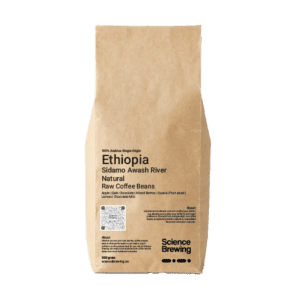
 Ethiopia Sidamo Awash River Natural – Raw coffeePrice range: 6,78 € through 16,23 €
Previous lowest price was 7,19 €.
excl. VAT Price range: 7,19 € through 17,20 €Previous lowest price was 7,19 €.
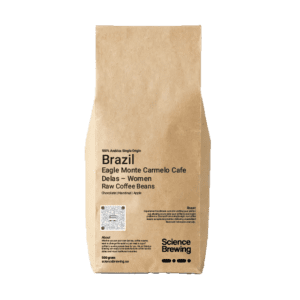
incl. VAT - Brazil Eagle Monte Carmelo Cafe Delas – Women – raw coffeePrice range: 6,35 € through 60,09 € excl. VAT Price range: 6,73 € through 63,70 € incl. VAT
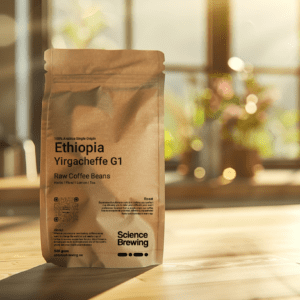
- Ethiopia Yirgacheffe G117,94 € excl. VAT19,02 € incl. VAT