For many coffee lovers, the journey towards the perfect cup starts long before brewing. Roasting your own coffee at home has become increasingly popular among enthusiasts who want full control over taste and quality. But what many don’t realize is that the process doesn’t end when the beans come out of the roaster. The cooling process plays a crucial role in preserving and enhancing the unique flavors of your specialty coffee. In this article, we’re going to dive deep into the art and science of cooling freshly roasted coffee, with a special focus on home roasting and how you can get the best out of your green coffee.
Introduction to coffee roasting and cooling
Coffee roasting is a fascinating process that transforms green, raw coffee beans into the aromatic, brown beans we all know. During roasting, the beans undergo a series of complex chemical reactions that develop hundreds of
For home roasters working with green coffee, understanding the cooling process is particularly important. Without the sophisticated cooling systems found in professional roasteries, home roasters need to pay extra attention to this critical phase to achieve the best possible results with their specialty coffee.

Why is refrigeration so important?
Cooling down freshly roasted coffee is not just a matter of bringing the beans to a manageable temperature. It is a crucial phase that affects the final taste, aroma and quality of the coffee. Here are some key reasons why proper cooling is so important:
- Stops the roasting process: When the beans leave the roaster, they actually continue to develop due to the inherent heat. Rapid cooling stops this process and “locks in” the desired flavor profile.
- Preserves aroma compounds: Many of the volatile compounds that give coffee its characteristic aroma can be lost if the beans remain hot for too long.
- Prevents over-roasting: Slow cooling can cause the beans to continue roasting, resulting in a darker and potentially bitter taste.
- Affects density and texture: Proper cooling helps preserve the cellular structure of the beans, which affects how they are ground and extracted during brewing.
- Quality control: For home roasters, the cooling process provides an opportunity to inspect the beans and ensure even roasting.
Simo Kristidhi, Production Manager at Solberg & Hansen and silver medalist of the 2022 World Coffee Roasting Championship, emphasizes the importance of cooling: “The cooling step slows down the high rate of development that occurs during roasting. It is as important as what happens inside the machine and plays a significant role in the overall taste, body and aroma.”
Chemistry and physics behind the cooling process
To really understand the importance of cooling, it’s helpful to dive into the underlying science. During roasting, coffee beans undergo a series of complex chemical reactions:
- The Maillard reaction: This reaction between amino acids and reducing sugars creates hundreds of new flavor compounds.
- Streak degradation: A reaction in which amino acids are broken down to form important aroma compounds.
- Caramelization: Sugars in the beans break down to form caramelized compounds that add sweetness and complexity.

When the beans leave the roaster, these reactions are still active due to the high temperature. Ben Morrow, co-founder of Manhattan Coffee Roasters, explains: “If the coffee is not cooled to below 30°C within the desired time frame, the beans continue to ‘cook’, making them taste flat and less vibrant.”
Physically, beans also undergo changes during cooling. When they cool down quickly and release moisture, their cell structure contracts and becomes denser. This affects how the beans later respond to grinding and extraction.
Methods for cooling coffee
There are several methods for cooling down freshly roasted coffee, each with its pros and cons:
- Air cooling: The most recommended method for specialty coffee. The beans are spread out on a perforated tray and cooled using fans that circulate room temperature air.
- Water quenching: An older method where water is sprayed directly onto the beans. This method is rarely used for specialty coffee as it can negatively affect the taste.
- Cooling with stirring: The beans are spread out on a cooling tray and stirred manually or mechanically to promote even cooling.
- Vacuum cooling: An advanced method used in some professional roasters, where the beans are cooled by rapid depressurization.

For home oysters, air cooling is often the most practical and efficient method. Simo Kristidhi comments: “In the last 15-20 years, fewer people have used water cooling as a cooling method. Even when it is used, it is usually done only for commercial coffee and not for specialty batches.”
Optimal cooling time and temperature
To achieve the best results with your home-roasted specialty coffee, it is important to understand the optimal parameters for cooling. Experts in the industry generally agree on the following guidelines:
- Cooling time: The aim is to cool the beans to room temperature in less than four minutes, preferably no more than five minutes.
- Target temperature: The beans should be cooled to below 30°C to stop any roasting process in progress.
- Starting temperature: Cooling should start immediately when the beans reach the desired degree of roasting, usually around 200-230°C depending on the roasting profile.
- Ambient temperature: The room temperature where the cooling takes place affects the process. In warmer climates or during summer months, extra measures may be needed to achieve rapid cooling.
Ben Morrow points out: “The cooling trays are large and porous, so when the beans are dropped into them, they give off water vapor. As the coffee beans rapidly cool and release moisture, their cell structure contracts and becomes denser.”
It is important to note that these parameters may vary slightly depending on coffee varieties, roast degree and the specific equipment used. Home roasters are encouraged to experiment and fine-tune the process to find the optimal cooling method for their specific setup.
Equipment for efficient cooling at home
For home roasters who want to achieve professional results, the right equipment is essential. Here are some tools that can help you effectively cool your freshly roasted coffee:
- Cooling tray: A shallow, perforated metal tray that allows air to circulate around the beans.
- Fans: One or more powerful fans to circulate air over the beans.
- Thermometer: to monitor the temperature of the beans during the cooling process.
- Timer: To ensure that cooling takes place within the recommended time frame.
- Stirrer: A wooden spatula or mechanical stirrer to ensure even cooling.
- Protective gloves: For safe handling of hot beans and equipment.
For more advanced home roasters, there are also purpose-built refrigeration systems available that can be integrated with home roasters to mimic professional equipment.
Common mistakes in refrigeration and how to avoid them
Even experienced home roasters can make mistakes during the refrigeration process. Here are some common pitfalls and how to avoid them:

- Too slow cooling: This can lead to over-roasting and flat flavors. Ensure sufficient air circulation and spread the beans out in a thin layer.
- Uneven cooling: Some beans may continue to develop longer than others. Stir the beans regularly during cooling.
- Use of water: Splashing water on the beans can lead to unwanted flavors. Stick to air cooling for best results.
- Ignore the ambient temperature: on hot days, cooling may take longer. Be prepared to adapt your process according to the season.
- Store beans too early: Packing beans before they are fully cooled can lead to condensation. Wait until they reach room temperature.
Simo Kristidhi warns: “Cooling the coffee unevenly and too slowly can lead to undesirable developments. An excessive amount of oils may develop on the surface of the bean roots as they would still contain a lot of energy from high roasting temperatures. This results in more bitterness and astringency, as well as fewer fruity flavors.”
How chilling affects different coffee varieties
Different coffees and origins may react differently to the cooling process. Here are some examples:
- Arabica vs. Robusta: Arabica beans tend to be more sensitive to over-roasting and often require faster cooling than the more robust Robusta beans.
- High altitude coffee: Coffee grown at high altitudes is often denser and may require longer cooling times to ensure that heat is conducted away from the core of the beans.
- Naturally processed vs. washed coffee: Naturally processed coffee, which often has a higher sugar content, may be more prone to caramelization during slow cooling and therefore requires extra attention.
- Light vs. dark roasting: Light roasted beans are often more sensitive to changes during cooling and require faster cooling to preserve their subtle flavors.
Experimenting with different coffee varieties and origins is an important part of home roasting. By carefully observing how different beans react to the cooling process, you can fine-tune your technique to bring out the best characteristics of each coffee.

Specialty coffee and the importance of controlled cooling
In the world of specialty coffee, where every nuance of flavor and aroma is highly valued, controlled cooling becomes even more important. Specialty coffees are often characterized by their unique flavor profiles and subtle nuances that can be lost or distorted by improper handling after roasting.
Ben Morrow explains: “The cooling trays are large and porous, so when the beans are dropped into them, they give off water vapor. As the coffee beans rapidly cool and release moisture, their cell structure contracts and becomes denser.” This process is crucial to preserving the unique characteristics of specialty coffee.
For home roasters working with high-quality green coffee, it is particularly important to invest time and resources in developing an efficient cooling process. This may mean experimenting with different cooling methods, investing in specialized equipment, or even adapting their roasting profile to take into account the cooling phase.
Expert advice for home oysters
To help home cheesemakers improve their cooling process, we have gathered some expert advice:
- Invest in a good cooling tray: A well-designed cooling tray with good air circulation is essential for fast and even cooling.
- Monitor the temperature carefully: use a reliable thermometer to monitor the temperature of the beans during cooling.
- Experiment and document: Try different cooling times and methods, and document the results to find your optimal process.
- Adapt by season: Be prepared to adjust your process during warmer months to achieve consistent results.
- Know your coffee: Different coffees and roast levels may require different cooling strategies. Learn how your favorite beans react.
Future trends in coffee roasting and cooling
Coffee roasting and refrigeration are areas that are constantly evolving, driven by both technological advances and an increasing understanding of the chemistry of coffee. Here are some trends that could shape the future of home roasting and refrigeration of specialty coffee:
- Precision-controlled cooling: Future home roasters may include advanced cooling systems that give the roaster precise control over the cooling curve.
- AI-assisted roasting and cooling: Artificial intelligence can help optimize both the roasting and cooling process based on data from previous roasts and flavor profiles.
- Vacuum cooling for home use: This technology, previously limited to commercial roasters, may become more accessible to enthusiasts.
- Environmentally friendly cooling methods: With an increased focus on sustainability, we can expect innovations in energy-efficient cooling.
- Increased awareness of the importance of refrigeration: More and more coffee enthusiasts will realize the importance of proper refrigeration, which may lead to more research and innovation in the field.
Summary and conclusions
Cooling down freshly roasted coffee is an often overlooked but critical part of the roasting process. For home roasters working with green coffee and striving to produce high quality specialty coffee, understanding and mastering the cooling process is as important as the roasting itself.
By carefully controlling the cooling, we can:
- Preserving the desired flavor profiles
- Prevent over-roasting and development of undesirable flavors
- Ensuring consistent quality from one roast to another
- Maximizing the potential of different coffee varieties and origins
As Ben Morrow points out: “A shorter chilling time results in more sweetness – and better results for roasters.” This underlines the importance of investing time and resources in perfecting the chilling process.
For home roasters, the key to success is to experiment, document and constantly strive to improve their process. By understanding the science behind refrigeration and using the right techniques and equipment, even home roasters can achieve results that rival professional roasters.
Roasting and cooling coffee is an art as much as a science. With the right knowledge, equipment and passion, home roasters can explore a world of flavors and aromas, creating a perfect cup of coffee that truly reflects their personal taste and skill.
- Product on sale
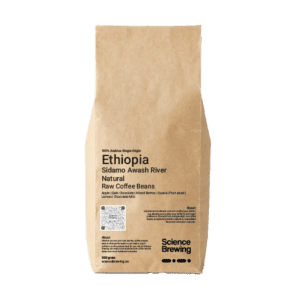
 Ethiopia Sidamo Awash River Natural – Raw coffeePrice range: 6,78 € through 16,23 €
Previous lowest price was 7,19 €.
excl. VAT Price range: 7,19 € through 17,20 €Previous lowest price was 7,19 €.
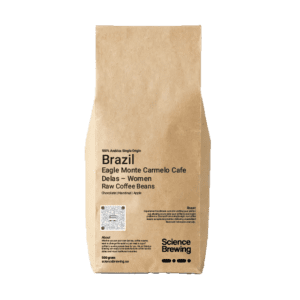
incl. VAT - Brazil Eagle Monte Carmelo Cafe Delas – Women – raw coffeePrice range: 6,35 € through 60,09 € excl. VAT Price range: 6,73 € through 63,70 € incl. VAT
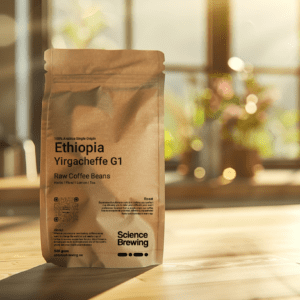
- Ethiopia Yirgacheffe G117,94 € excl. VAT19,02 € incl. VAT
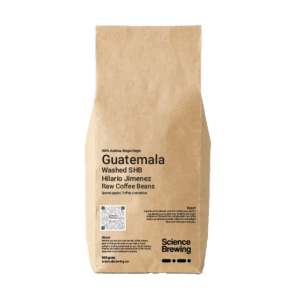
- Guatemala Washed SHB Hilario Jimenez – Raw coffeePrice range: 5,92 € through 15,37 € excl. VAT Price range: 6,28 € through 16,29 € incl. VAT
- India Arabica Malabar AA, Monsooned – Green coffeePrice range: 10,74 € through 17,08 € excl. VAT Price range: 11,38 € through 18,11 € incl. VAT
- Colombia Dulima EP10 – Green coffeePrice range: 6,78 € through 17,08 € excl. VAT Price range: 7,19 € through 18,11 € incl. VAT