
Coffee prices have risen sharply in 2024 due to several interacting factors. Extreme weather conditions in key coffee-producing countries such as
Background: Coffee price developments
Coffee prices have shown a clear upward trend in recent years. According to data from the International Coffee Organization (ICO), the global coffee price index rose by over 30% in the first three months of
In Sweden, price increases have been even more pronounced. According to Statistics Sweden (SCB), the consumer price of coffee rose by 15.2% in 2023, and the trend has continued in 2024 with further price increases of around 10% in the first quarter of the year.
Kanica Goel, Senior Analyst at The Smart Cube, explains:
“The main factor driving this price increase is supply concerns in the main coffee producing regions – Brazil and Vietnam – which together account for 55% and 50% of global coffee production and exports respectively.“1
Triggers behind the price increases

1. extreme weather conditions
Climate change and extreme weather events have had a significant impact on coffee production in key growing regions:
- In Brazil , the state of Minas Gerais, which accounts for around 30% of the country’s arabica crop, was hit by 235% higher than average rainfall in March 2024. This was followed by extreme drought in April and May, which damaged coffee
crops1 . - Vietnam, the world’s largest producer of robusta coffee beans, has been hit by a severe drought that could lead to a 20% drop in coffee production in the 2023/24 crop year compared to the previous year1.
Antonio Baravelle, CEO of the Lavazza coffee group, comments on the situation:
“We face major challenges as commodity prices are pushed upwards. Climate change is having a direct impact on coffee farming, and we are increasingly seeing extreme weather events that negatively affect harvests.”
2. Geopolitical conflicts and logistical problems

Conflicts and disruptions in global supply chains have helped drive up coffee prices:
- The crisis in the Red Sea has caused delays and increased freight costs for coffee shipments to Europe.
- Port congestion and delays at key export ports have further exacerbated the situation.
Lars Appelqvist, CEO of Löfbergs in Sweden, said:
“The geopolitical tensions and logistical problems have created a perfect storm for the coffee industry. We are seeing increased costs at all stages of the supply chain, from cultivation to transportation and processing.”
3. New EU rules on deforestation
New EU rules to combat deforestation, which came into force in June 2023, have put further pressure on coffee prices:
- The rules require coffee farmers to use satellite coordinates to digitally map their farms and prove that the land has not been recently deforested.
- For many small-scale farmers in developing countries, this is an almost impossible task due to lack of resources and technical expertise.
Giuseppe Lavazza, President of Lavazza, has criticized the rules and warned of the consequences:
“This introduces a major restriction and a very strong market distortion. For all European coffee roasters, this is very challenging. Think about growers in Central America, I think very few of them are ready to comply with the regulation.“3
4. Increased global demand

Despite rising prices, global demand for coffee continues to grow:
- According to the ICO, coffee consumption has increased globally and demand now exceeds supply1.
- Existing reserves of green coffee beans are dwindling rapidly as the coffee industry tries to avoid the high prices on the futures market.
Sahra Nguyen, founder of Nguyen Coffee Supply, a specialized Vietnamese coffee roaster and importer, comments:
“There are many factors influencing the price increase of robusta, including drought-related shortages that drive up the price with demand. In addition, climate-related deficiencies on
Situation in Sweden

Sweden, one of the world’s most coffee-loving countries, has been hit hard by global price increases:
- According to Statistics Sweden, coffee prices in Sweden rose by 15.2% in 2023, which was one of the largest price increases among food products.
- In the first quarter of 2024, prices have continued to rise by around another 10%.
Helena Eriksson, Marketing Manager at Arvid Nordquist, a leading Swedish coffee roaster, said:
“We see continued upward pressure on coffee prices in Sweden. As a small country, we are particularly sensitive to global price fluctuations, and the development in recent years has been exceptional.”
Several Swedish coffee shop chains have been forced to raise their prices as a direct result of the increased cost of raw materials. Johan Damgaard, CEO of Espresso House, comments:
“We have done everything we can to absorb the cost increases, but in the end we have had to adjust our prices to ensure the long-term sustainability of the business.”
Arguments for roasting your own coffee

In light of rising coffee prices, interest in roasting your own coffee has increased significantly. Here are some of the main arguments for taking the plunge and starting to roast at home:
1. cost saving
Buying green coffee beans directly from importers or growers and roasting them yourself can often save significant amounts of money compared to buying ready-roasted beans:
- Green beans are often 50-60% cheaper than the equivalent roasted beans.
- Even taking into account the investment in a coffee roaster can often save money in the long run, especially for large consumers.
2. freshness and quality
Self-roasted coffee allows for optimal freshness and control over the roasting process:
- Coffee is at its best 1-2 weeks after roasting. By roasting yourself, you can always have freshly roasted coffee available.
- You can experiment with different roasting times and temperatures to find your perfect roast.
3. Increased knowledge and appreciation
Roasting your own coffee gives you a deeper understanding of its origins and properties:
- You will learn more about different coffee varieties, countries of origin and growing methods.
- It will be easier to appreciate subtle differences in taste and aroma.
4. environmental aspects
Home roasting can have some environmental benefits:
- Less packaging material is used when buying green beans in bulk.
- Transport costs can be reduced by buying directly from importers.
Erik Rosendahl, founder of the Swedish Roasting Company and experienced coffee roaster, says:
“Roasting your own coffee is not just a way to save money, it’s a whole experience. You get a deeper connection to the coffee and can tailor the roast to your own taste. In times of high coffee prices, we definitely see an increased interest in home roasting.”

Tips for next steps
For those who want to immerse themselves further in coffee roasting, there are several possibilities:
- Take a course: Many coffee roasting companies offer coffee roasting courses for both beginners and more experienced roasters.
- Invest in better equipment: A dedicated coffee roaster with more advanced controls can provide more consistent results.
- Explore different origins: Try beans from different countries and regions to expand your flavor palette.
- Get involved in the coffee community: participate in forums, fairs and events to learn more and share experiences.
- Consider direct trade: For the truly committed, there are opportunities to buy directly without intermediaries, which can provide both better prices and unique coffee experiences.
Conclusion
Rising coffee prices in 2024 have been a challenge for both industry and consumers. While the underlying factors are complex and largely out of our control, there are opportunities for coffee lovers to take matters into their own hands. Roasting your own coffee offers not only a potential cost saving, but also a deeper appreciation for the art and science of coffee. In times of economic uncertainty and climate change, home roasting can be a way to secure access to high-quality coffee at a reasonable price.
- Product on sale
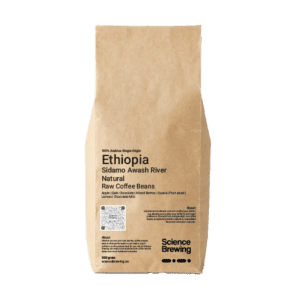
 Ethiopia Sidamo Awash River Natural – Raw coffeePrice range: 6,78 € through 16,23 €
Previous lowest price was 7,19 €.
excl. VAT Price range: 7,19 € through 17,20 €Previous lowest price was 7,19 €.
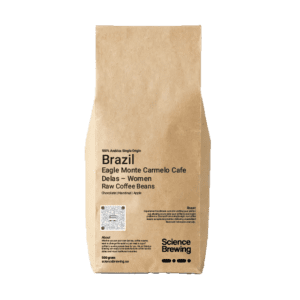
incl. VAT - Brazil Eagle Monte Carmelo Cafe Delas – Women – raw coffeePrice range: 6,35 € through 60,09 € excl. VAT Price range: 6,73 € through 63,70 € incl. VAT
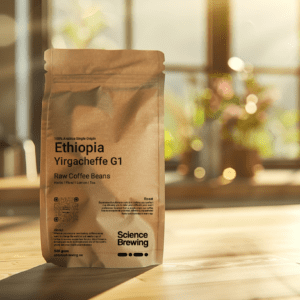
- Ethiopia Yirgacheffe G117,94 € excl. VAT19,02 € incl. VAT
[10]
[11] Citations:
1 https://www.thearmchairtrader.com/commodities/coffee-futures-prices-forecast-may-2024/
2 https://investorplace.com/2024/04/coffee-price-forecast-2024-how-much-higher-will-record-coffee-prices-go/
3 https://www.euronews.com/business/2024/07/15/coffee-prices-likely-to-keep-hotting-up-due-to-terrible-eu-rules
[4] https://rossettecoffee.com/blogs/news/the-future-of-coffee-predicting-coffee-industry-trends-for-2024
[5] https://ec.europa.eu/eurostat/fr/web/products-eurostat-news/w/ddn-20240510-1
[6] https://www.euronews.com/business/2024/05/18/wake-up-and-smell-the-coffee-but-wheres-the-best-value-espresso
[7] https://www.giesen.com/benefits-and-challenges-of-in-house-coffee-roasting/
[8] https://primoscoffeeco.com/blogs/primos-coffee/5-advantages-of-roasting-your-coffee xml-ph-0008@deepl.i