Using a coffee scale to make espresso
Executive summary
Using a coffee scale to make espresso at home is a step towards achieving barista quality in every cup. A scale helps you accurately measure coffee beans and water, ensuring consistency and precision in every shot. By following a systematic method, you can adjust variables such as dose, brew time, and extraction amount to achieve the perfect espresso. This article provides an in-depth guide on why and how to use a scale in espresso making, as well as tips for those who want to take their brewing to the next level.
Background information
Espresso is a concentrated coffee drink made by forcing hot water through finely ground coffee beans under high pressure. Originally patented by Angelo Moriondo in 1884 and further developed by Luigi Bezzera in 1901, espresso making has become an art form where precision and consistency are crucial. By using
Why use a coffee scale?
- Precision: A scale allows you to measure the exact amount of coffee beans and water, leading to consistent results.
- Control: By measuring your ingredients accurately, you can adjust and fine-tune your brewing process to achieve the flavor you prefer.
- Reproducibility: Once you have found the perfect setting, you can reproduce it over and over again, giving you a consistently high quality of your espresso.

Step-by-step guide to using a coffee scale
1. preparation
- Equipment: You will need an espresso machine, a coffee grinder, a coffee scale, fresh coffee beans and clean water.
- Coffee: Choose high-quality beans, preferably Arabica, for a more complex flavor profile. Make sure the beans are freshly roasted for best results.
2. Measuring beans
- Place the portafilter on the scale and zero it.
- Measure out the desired amount of coffee beans, usually between 18-20 grams for a double espresso.
- Grind the beans to a fine consistency, suitable for espresso.
3. tamping
- Distribute the ground beans evenly in the portafilter.
- Use a tamper to press the beans with even pressure, ensuring a smooth extraction.
4. extraction
- Place the portafilter in the espresso machine.
- Place a cup on the scale and zero it.
- Start the extraction and note the time. A standard double espresso should be extracted in about 25-30 seconds.
- Turn off the machine when you have reached the desired amount of espresso, usually 36-40 grams.
5. fine-tuning
- If the espresso tastes bitter, it may be due to over-extraction. Reduce the grind size or reduce the dose.
- If the espresso tastes sour, it may be due to under-extraction. Increase the grind size or increase the dose.
- Experiment with different variables until you find the perfect balance
Tips for taking the next step
Invest in a high-quality grinder
A good coffee grinder is essential to achieve an even and consistent grind. A stepless grinder, which allows you to adjust the grind size very precisely, is ideal for espresso making.
Use filtered water
The quality of the water affects the taste of the espresso. Use filtered or purified water to avoid minerals and impurities that can affect the taste and performance of the machine.
Experimenting with different beans
Different beans have different flavor profiles. Try different origins and roasts to find your favorites. Single-origin beans can offer unique flavors that can enhance your espresso experience.
Keep the machine clean
Regular cleaning of your espresso machine is important to maintain its performance and prevent old coffee particles from affecting the taste of your espresso.
Learn from the professionals
Take online courses, participate in barista workshops or read books on espresso making to deepen your knowledge and improve your skills.
Conclusion
Using a coffee scale to make espresso is a necessity for anyone who strives for perfection in their coffee making. By understanding and controlling the different variables in the brewing process, you can achieve outstanding results and enjoy a delicious espresso at home. With the right equipment, careful measurement and a willingness to experiment, you can take your espresso making to new heights and become your own barista.
Read more about how to roast for espresso or maybe pour over?
- Product on sale
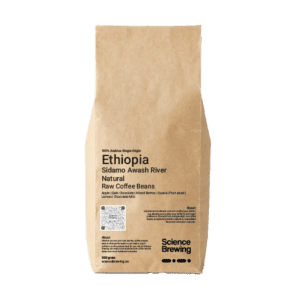
 Ethiopia Sidamo Awash River Natural – Raw coffeePrice range: 6,78 € through 16,23 €
Previous lowest price was 7,19 €.
excl. VAT Price range: 7,19 € through 17,20 €Previous lowest price was 7,19 €.
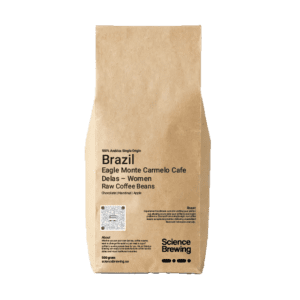
incl. VAT - Brazil Eagle Monte Carmelo Cafe Delas – Women – raw coffeePrice range: 6,35 € through 60,09 € excl. VAT Price range: 6,73 € through 63,70 € incl. VAT
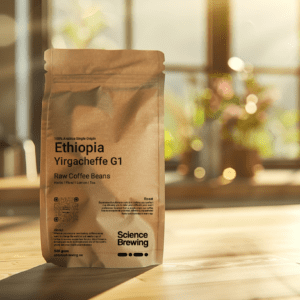
- Ethiopia Yirgacheffe G117,94 € excl. VAT19,02 € incl. VAT